Published
8 minute read
Recovery is smoother when you plan the first 2–3 weeks: elevate, wear the right support, walk lightly, protect incisions, and follow these breast lift recovery tips for a smoother healing and more manageable downtime. Your actions after the procedure impact your experience and results.
Recovering from a breast lift (mastopexy) surgery involves several steps and precautions to ensure a smooth and effective healing process. The recovery period after undergoing a breast lift procedure is typically straightforward and uncomplicated. However, you should research it beforehand. Here are some breast lift recovery week-by-week tips to help you manage your recovery efficiently:
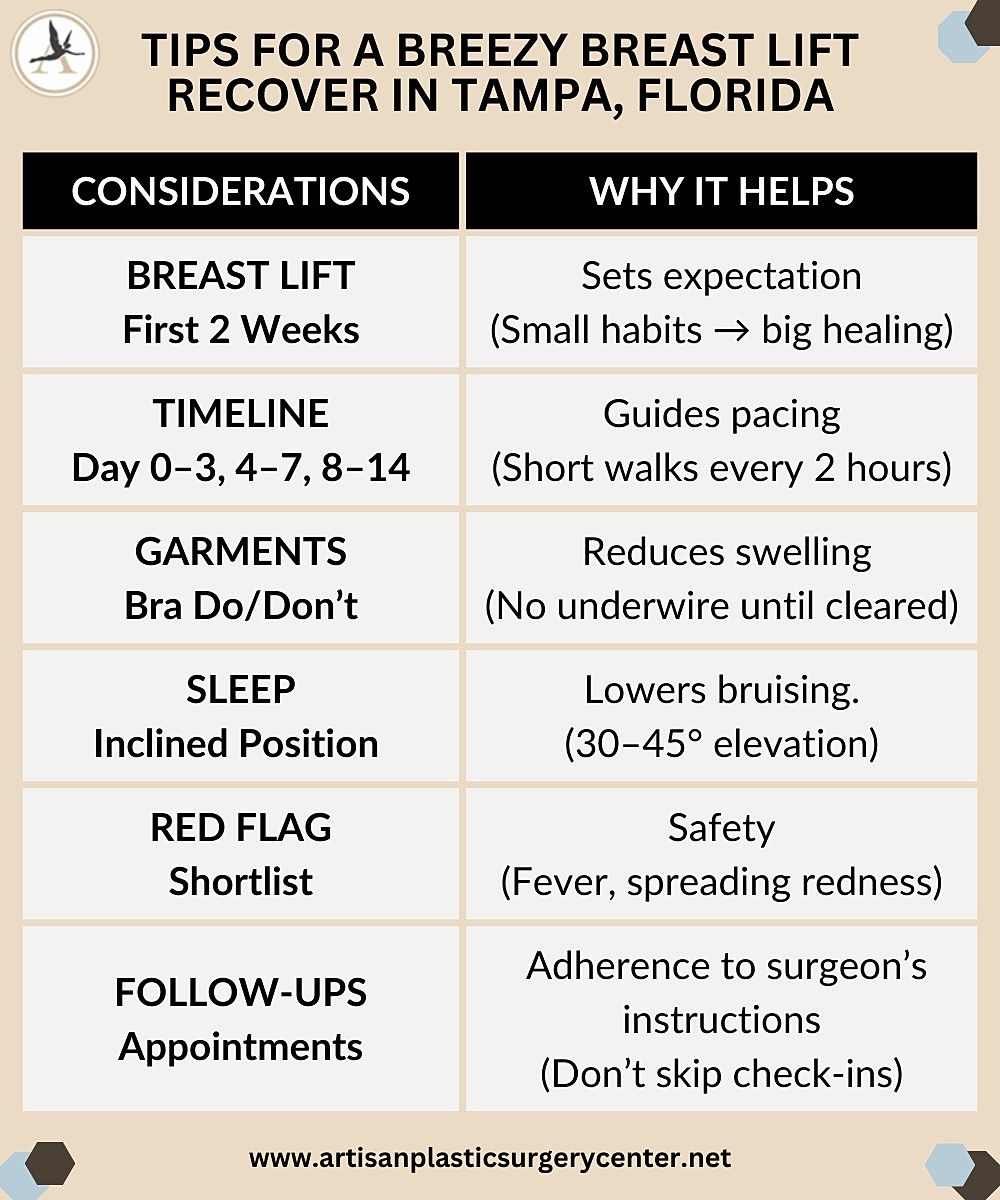
Ensure you get plenty of rest. Sleep with your upper body elevated using pillows to reduce swelling and discomfort. Rest plays a crucial role in the initial phases of breast lift recovery. This period is not suitable for exerting excessive effort or hastily resuming your regular activities. Nonetheless, remaining completely immobile in bed is inadvisable. To reduce swelling and prevent blood clots, it is essential to engage in short walking sessions lasting 10 minutes every two hours.
Maintaining an upright position following surgery plays a vital role in minimizing bruising and swelling. Instead of lying flat on your back, opt for elevating yourself with multiple pillows or utilize a reclining chair. Refrain from bending over or leaning forward.
After the breast lift procedure, any unusual sensation or occurrence may be concerning. After surgery, numerous women experience sensations like prickling, irritation, irregularity, and rigidity in the areas that underwent treatment. The feelings you experience right now are common and natural. They will fade as time passes. Consult your post-op instructions to learn more. and avoid hard physical work and tough exercises for a minimum of 4 to 6 weeks following the operation.
Start engaging in physical activities gradually, following the surgeon’s guidance and recommendations based on the breast lift recovery process. Besides this, smoking can significantly delay healing and increase the risk of complications. Drinking alcohol can affect how well some medicines function in your system.
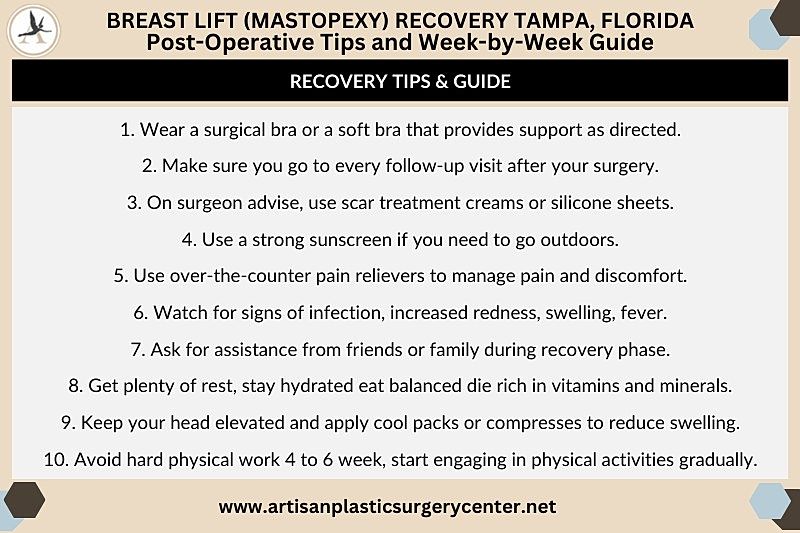
Apply cool packs or compresses to reduce swelling. Cover them with fabric to prevent direct skin contact. Apply cool packs to your chest for 20-minute intervals to alleviate discomfort. Avoid placing ice or frozen objects directly on your skin. Instead, use a towel as a protective barrier over the area being treated.
It’s crucial to stay hydrated after your procedure. Consume sufficient amounts of water. Eat a diet that is balanced and contains vitamins and minerals. This helps with the healing process. Adopt a nutritious diet plan that includes water, milk, and fruit juices; your dietary choices also matter. On the initial day, adhere to straightforward, gentle, and nutritious food selections. After that timeframe, it is advisable to maintain a healthy diet to facilitate healing. For the initial day, choose plain, gentle, and nourishing food options; following that period, maintain a diet of wholesome meals to aid in the breast lift recovery journey.
Dr. Stan Castor, a plastic surgeon with board certification, will explain the breast lift recovery week by week and the overall healing process you can expect. This explanation considers your job, the surgical method used, and other personal details.
Wear a surgical bra or a soft bra that provides support as directed. Additionally, it decreases inflammation and provides support for the breasts during the healing process.
Make sure you go to every follow-up visit after your surgery. Furthermore, this allows your surgeon to keep an eye on how you’re recovering. As well as deal with any issues that may come up.
Once your surgeon advises, start using scar treatment creams or silicone sheets to help reduce the appearance of scars.
Shield your marks from sunlight to stop them from getting darker in color. Use a strong sunscreen if you need to go outdoors.
Consume the pain relief medication provided to you according to the instructions given by the medical professional who performed your surgical procedure. Over-the-counter pain relievers may also be recommended to manage discomfort.
Watch for signs of infection such as increased redness, swelling, fever, or unusual discharge from the incision sites. Contact your surgeon if any of these occur.
Follow the instructions given by your surgeon carefully. This includes care of your incisions, medications to apply or take orally, and when to return for follow-up care.
Don’t hesitate to ask for assistance from friends or family during your breast lift week-by-week recovery. Help around the house, especially with tasks that involve lifting or strenuous activity, can be very beneficial.
Keep yourself informed about what to expect during each stage of your recovery. This can help you identify normal healing signs versus symptoms that might require a call to your surgeon. Healing takes time, and it’s important to have realistic expectations about recovery and results. Emotional ups and downs are normal, but staying positive can make a big difference in your recovery experience.
Recovery time can vary, but most patients can expect to be fully recovered within 2-4 weeks.
Follow your surgeon’s post-op instructions, get plenty of rest, and avoid strenuous activities for the first few weeks.
It’s normal to experience some discomfort, but your surgeon will provide pain medication to help manage it.
Your surgeon will let you know when it’s safe to start wearing a supportive bra, usually within a few weeks after surgery.
You may be advised to wait a few days before showering, and when you do, be sure to gently wash your incision sites.
Scarring is inevitable with any surgery, but it should fade over time, and your surgeon may suggest scar treatment options.
You should avoid driving for at least the first week after surgery or until you are no longer taking pain medication.
Most surgeons recommend avoiding strenuous exercise for 4-6 weeks after surgery to allow proper healing.
Focus on a healthy, balanced diet rich in nutrients to help promote healing and reduce inflammation.
Your surgeon may recommend sleeping on your back with a few pillows to help support your chest and reduce swelling.
It’s best to avoid alcohol for the first few weeks after surgery, as it can interfere with healing and increase the risk of complications.
Most patients can return to work within 1-2 weeks, depending on the nature of their job and their level of recovery.
Apply ice packs to the surgical area and avoid salt, caffeine, and alcohol to help reduce swelling.
Yes, your surgeon will schedule follow-up appointments to monitor your progress and address any concerns you may have.
It’s important to prioritize self-care, get plenty of rest, and avoid smoking to help promote a smooth recovery process.
Breast lift recovery tips may vary depending on your individual circumstances. Some general advice could include getting plenty of rest, avoiding strenuous activities for a period, and following your surgeon’s instructions carefully. Wearing supportive garments and keeping the area clean may also aid healing, and be patient, as full recovery takes time. By following these breast lift recovery tips and maintaining close communication with your surgeon, you can help ensure a smoother and more effective recovery from your breast lift surgery.
Each person’s recovery process can vary, so it’s important to listen to your body and adjust accordingly. Reach out to us by calling (813) 971-2000 to schedule your complimentary breast lift consultation. Also, take a look at our before-and-after photos showcasing individual transformations to inspire you.