
Published
10 minute read
Fat grafting for breast augmentation uses your own tissue for a subtle, softer enhancement; implants offer more volume and longer predictability. Dr. Castor helps patients weigh durability against natural feel when selecting fat grafting vs. implants.
The choice between fat grafting vs. implants often depends on the desired outcome. As well as the specific area of the body being treated, and personal preferences.
When individuals are considering fat grafting vs. implants for cosmetic enhancements. Either surgeons recommend fat grafting or breast implants or fat grafting for breast augmentation. Fat grafting or fat transfer employs your body’s fat for modest natural breast enlargement. Implants offer more striking and predictable outcomes. Each method has unique benefits and limitations in feel, volume, and maintenance.
Here’s a detailed comparison of fat grafting vs. implants in terms of their natural look and feel.
Fat grafting provides a dual benefit. As well as reducing fat in unwanted areas while enhancing other areas.
Since the material used is from your own body, there is a lower risk of rejection or allergic reactions compared to implants.
This procedure is generally less invasive than implant surgery. Moreover, with potentially smaller incisions (depending on the area and amount of fat being transferred).
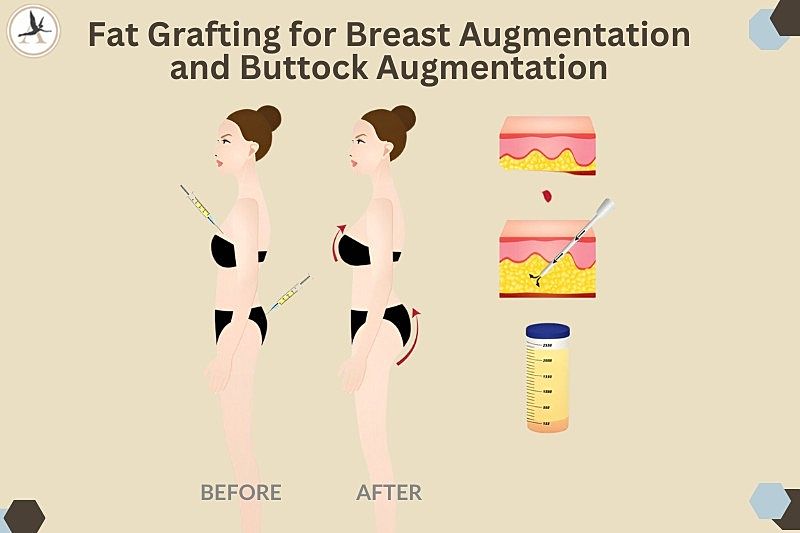
Fat grafting involves using the body’s own fat, harvested from another area of your body. The surgeon removes fat from areas such as the stomach, thighs, or buttocks through a liposuction procedure. Then the surgeon enhances it by injecting it into the area. Since it uses the body’s own tissue, the results tend to feel and look more natural compared to synthetic materials. The popularity of fat grafting for buttock augmentation has also seen significant growth. Precisely, with over 20,000 procedures performed in 2022.
To point out, there is a limit to how much volume can be added using this technique. Especially in one session, which might not be sufficient for those seeking a large increase in size.
A significant drawback is that some of the transferred fat may be reabsorbed by the body over time. Eventually, it can lead to less predictable results and might require multiple procedures to maintain the desired effect.
However, fat grafting is best suited for patients looking for a more subtle, smaller enhancement. Nonetheless, it may take multiple sessions to achieve the desired results. Because the body may absorb some of the transferred fat over time. Besides this, a small percentage of patients may experience fatty nodules or cysts that have to be drained or removed.
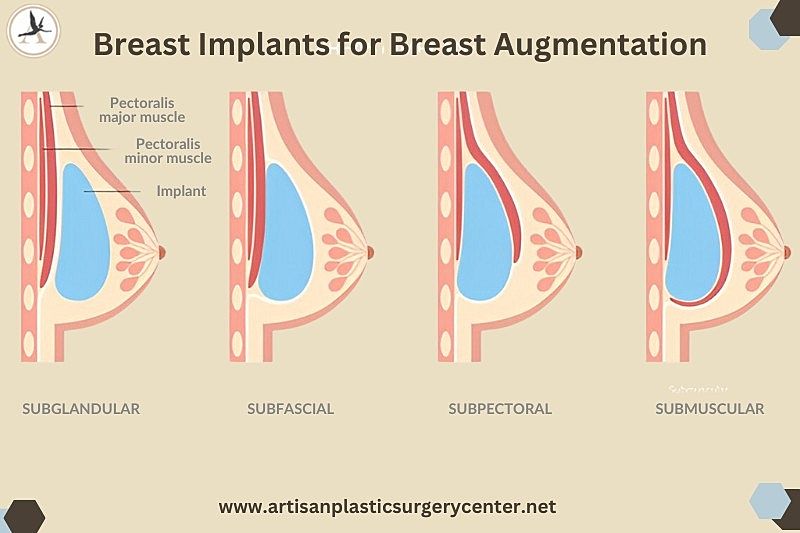
Breast implants are one of the most popular methods of breast augmentation. During this procedure, silicone or saline implants are surgically placed to add volume and shape to the breasts. Breast augmentation remains the top cosmetic surgical procedure in the USA. In 2022, over 300,000 breast augmentation procedures were performed, predominantly using implants.
The Journal of the American Medical Association (JAMA) published a comprehensive review on the safety of silicone breast implants. Noting a low but significant risk of complications such as capsular contracture and implant rupture.
Individuals can choose between silicone and saline implants. Nevertheless, the surgeon can help guide the best fit for an individual’s body type. To demonstrate, silicone implants are preferred over saline implants. Moreover with about 85% of all breast augmentations use silicone.
Implants offer a predictable size and shape. Individuals with the help of a breast implant stimulator can see the procedure results beforehand. As a result, this makes it easier to achieve a specific desired outcome.
Another key point, once the body heals, the outcomes tend to remain consistent. Furthermore, it requires revisions solely for complications or the replacement of aged implants.
Without a doubt, breast implants enable a substantial enlargement and reshaping in a single surgical procedure. Especially for those desiring a more drastic change, implants may be the optimal solution. Subsequently, implants can provide a significant increase in volume. Particularly useful in cases where a dramatic change is desired.
A 2022 study in the Plastic and Reconstructive Surgery Journal examined the long-term outcomes of facial implants, noting improvements in technique and patient satisfaction.
Especially in areas like the breasts, implants may feel less natural than native body tissue. Although the difference in feel can depend on the type of implant and its placement.
Implants carry risks such as rupture, capsular contracture (where scar tissue forms around the implant), and infection. There’s also the potential need for replacement or removal in the future.
While implants can provide dramatic results, some patients feel they don’t look or feel as natural as fat grafting. Implants also carry the risk of complications, such as rupture or capsular contracture (scar tissue forming around the implant).
If seeking a natural look and feel, fat grafting provides natural results. Because it uses your own fat. The breasts will feel soft and natural to the touch, and there’s no risk of allergic reactions or foreign objects in the body. However, fat grafting offers only smaller volume increases, and multiple sessions may be necessary. Additionally, fat grafting can lead to breast nodules or cysts, which may require drainage or removal.
On the other hand, breast implants allow for larger, more defined changes in one surgery. While some patients worry about implants feeling less natural, modern silicone implants are. In particular, it can closely mimic the feel of natural breast tissue. Ultimately, the decision comes down to the individual aesthetic goals and body shape.
Fat grafting involves transferring fat from one part of the body to the breasts. On the other hand, surgeons place implants, either silicone or saline-filled devices, in the breasts.
Generally, fat grafting can provide a more natural-looking result as it uses the patient’s own tissue to enhance the breasts.
Both procedures come with some health risks. You might get an infection after the operation. The skin could form scars that stay visible. Some women also notice their breasts feel different or less sensitive afterward. These problems can happen with any type of breast surgery.
The results of fat grafting can be more variable and may require touch-up procedures. While surgeons typically consider implants to be longer-lasting.
Fat grafting typically costs more than breast implants. Surgeons need to first remove fat from another part of your body through liposuction. They then clean the fat and inject it into your breasts. This way costs more money because there are more steps involved than regular implants.
Surgeons use both fat grafting and implants for breast reconstruction after mastectomy or other breast surgeries.
Yes, there is a limit to the amount of fat that a surgeon can safely transfer during a single fat grafting procedure.
Indeed, surgeons use both procedures to correct asymmetry in the breasts.
The recovery time for fat grafting is typically shorter than for implants, as it is a less invasive procedure.
There are no specific age restrictions for either procedure, but patients should be in good overall health.
Both can enhance breast volume. However, implants often create more dramatic results. As fat grafting procedures take fat from other body, then put it into the breasts. The process is natural but gives more subtle changes. But implants let you choose exactly how much bigger you want to go.
Surgeons usually advise patients to avoid strenuous activity. Postoperatively, for a certain period after both procedures, to allow for proper healing.
Both fat grafting and implants may make it more difficult to detect breast cancer on a mammogram, so patients should inform their healthcare providers of their history of breast surgeries.
Some women may have difficulty breastfeeding after fat grafting or implants, so it is important to discuss this with your surgeon before undergoing either procedure.
It is important to consult with a board-certified plastic surgeon to discuss your goals, preferences, and medical history to determine the best option for your individual needs.
Implants, especially for breast augmentation, remain more popular in terms of sheer numbers. However, fat grafting is gaining popularity due to its less invasive nature and dual benefit of liposuction and augmentation.
Both procedures are seeing technological advancements. For implants, the development of more cohesive silicone gels and anatomically shaped options offers better outcomes. For fat grafting, improved techniques for fat purification and injection are increasing the survival rate of transferred fat.
Understanding the differences between fat grafting vs. implants is important for making the right choice for the desired outcome. The best way to choose between fat grafting vs. implants is to consult a board-certified plastic surgeon. At Artisan Aesthetics Plastic Surgery, we specialize in both procedures and will help you determine the right option for your goals.
As a board-certified plastic surgeon, I’ve over 20 years of experience. I usually recommend breast implants instead of fat grafting. Regardless of individual preference, I provide guidance to my patients to select the option that aligns with their body and aesthetic goals.